Bass Tuning Issues – Why You May Be Having Trouble
Why You May Be Having Issues Tuning Your Bass
*This lesson is just a fix for some tuners, but these are good tricks to know either way.*
Your tuner probably does work with your bass. I was having trouble with an app, so I made this quick lesson to explain what was happening.
The thicker bass strings (especially the 3rd & 4th strings) vibrate at much lower frequencies than guitar strings. Many **phone apps and guitar tuners struggle to register these lower notes clearly.**
If your top two strings (G and D) register well, but the bottom two (A and E) do not, your tuner is likely fine — it just has trouble detecting the lower frequencies.
The Solution!
Try tuning to a note higher up the neck. For example: tune your low E string using the **12th fret**, where the note is still E but an **octave higher**.
The 12th fret is the easiest reference point — it always matches the open string.
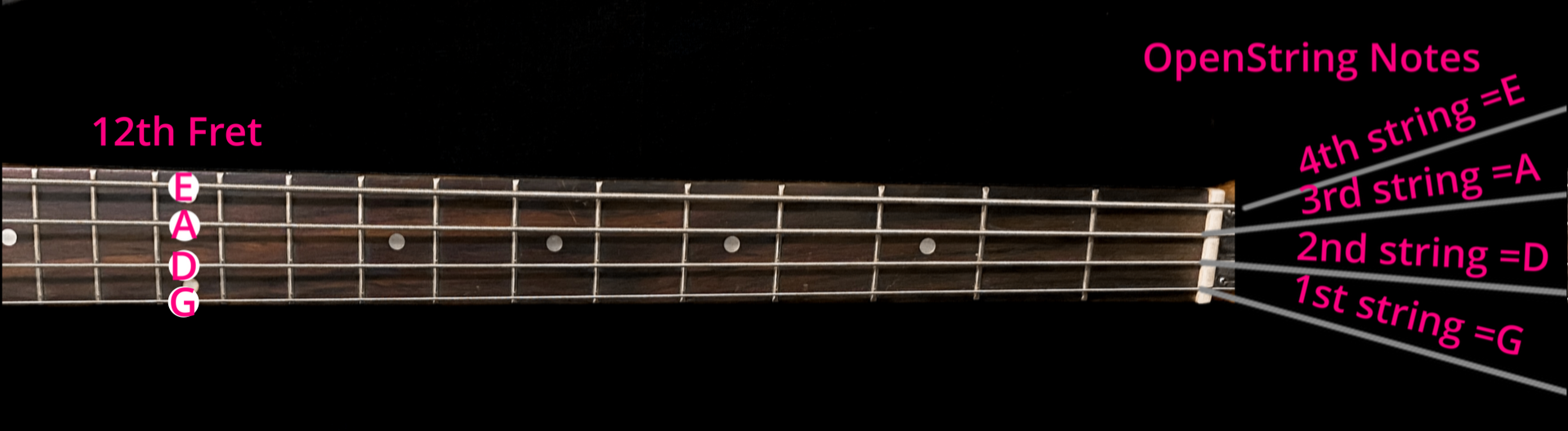
Use this trick if your app or tuner doesn’t read low frequencies well. The higher octave helps the tuner lock onto the note.
Tuning by Ear – The 5th Fret Method
You can also tune strings to each other without a tuner.
If you move up one string and up five frets, those two notes will match. For example:
- 5th fret on the A string = open D string
- 5th fret on the D string = open G string
This works the same way across all strings.
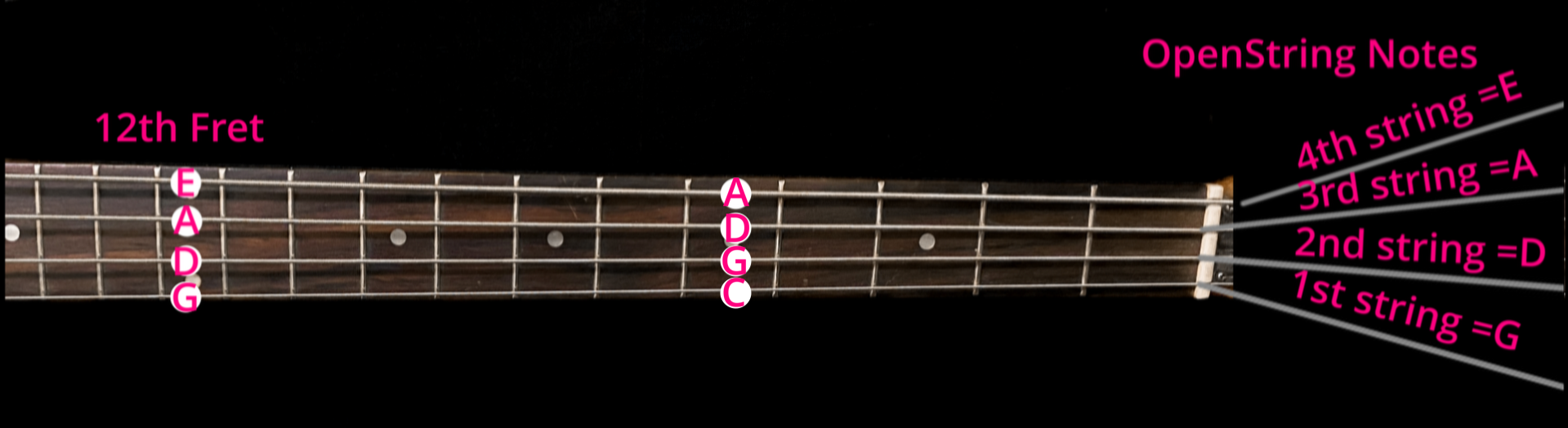
For example, the 4th string 5th fret (A) matches the 3rd string open (A). Once one string is in tune, you can tune all the others to it.
If you have any questions, feel free to send me an email or ask during your lesson!